
The Death of the T-Shaped Designer
Why depth in one skill is no longer a moat, and why the Tree-Shaped Designer is the future of our industry in the AI era.
A magyar fordítás folyamatban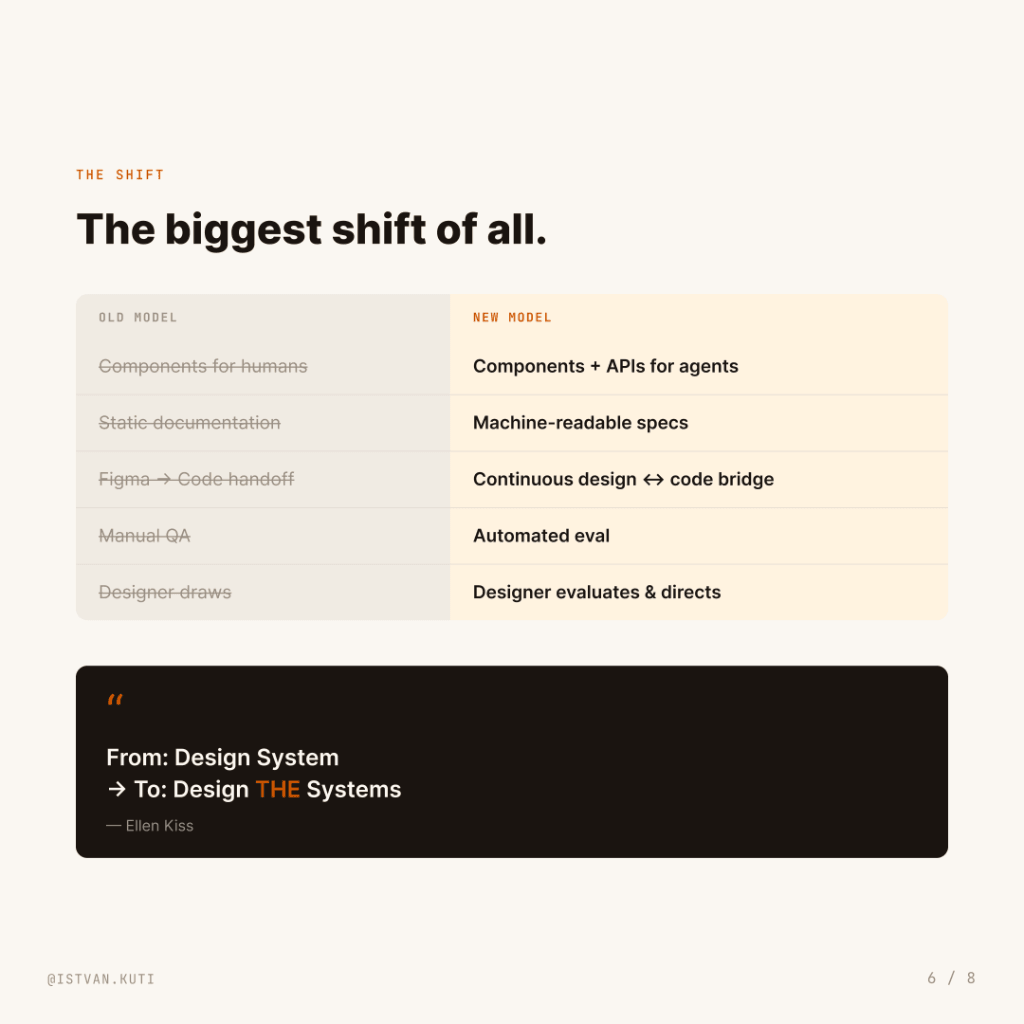
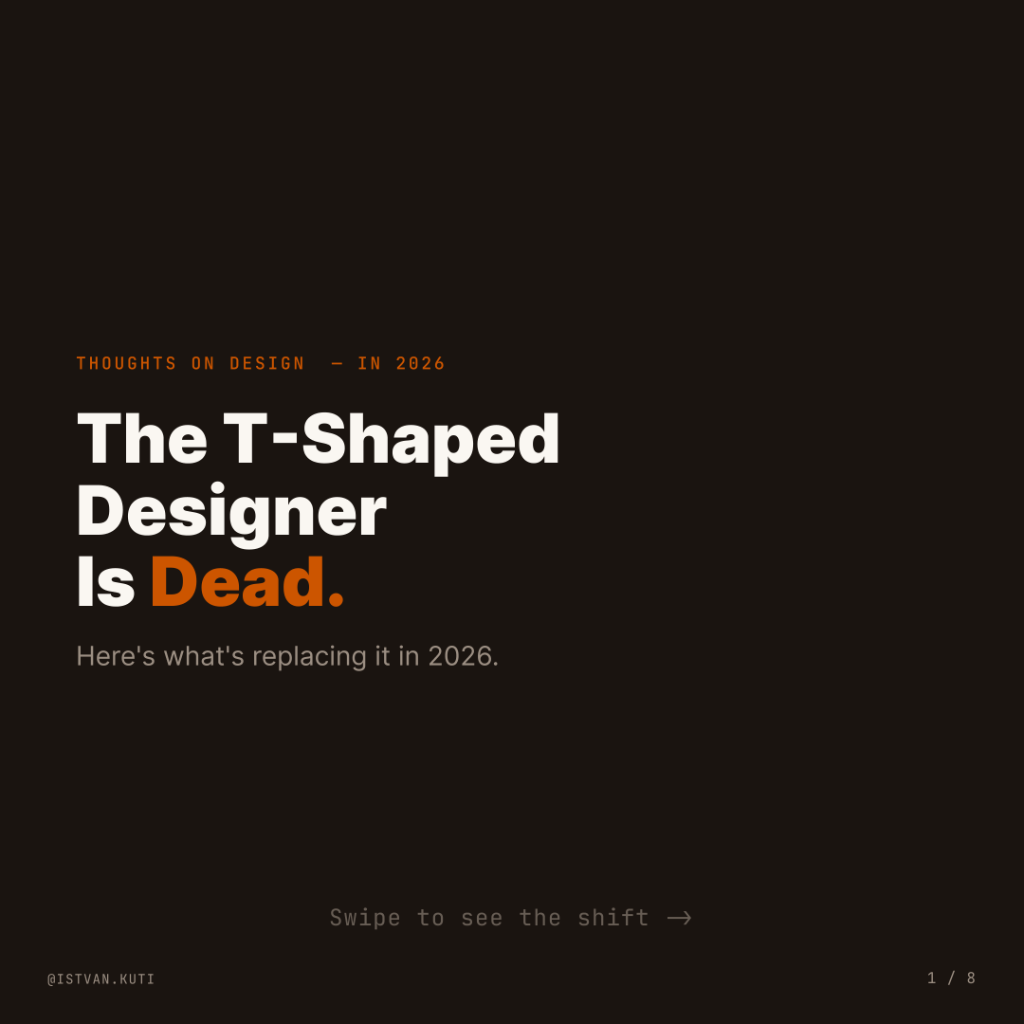
The T-Shaped Designer Is Dead.
Here's what's replacing it in 2026.
We've been measuring designers wrong.
For twenty years, we celebrated T-shaped designers. The recipe was universally accepted: cultivate wide generalist knowledge across various disciplines, while developing one deep, penetrating specialization.
But AI just changed the equation.
When autonomous agents and systems can execute in seconds what traditionally took designers hours, depth in one skill is no longer a moat. Execution has rapidly become a commodity.
The Three Forces Shaping the New Era
Three monumental shifts are happening simultaneously:
- The Architect's Pivot (Jason Cyr) Designers are moving from raw production to strategic direction.
- UX to AX (John Maeda, Design in Tech 2026) We're designing for agents, not just users.
- The Builder Identity (Boris Cherny, Anthropic) "The title software engineer will go away. It will be replaced by builder."
The exact same is true for designers.
Introducing: The Tree-Shaped Designer
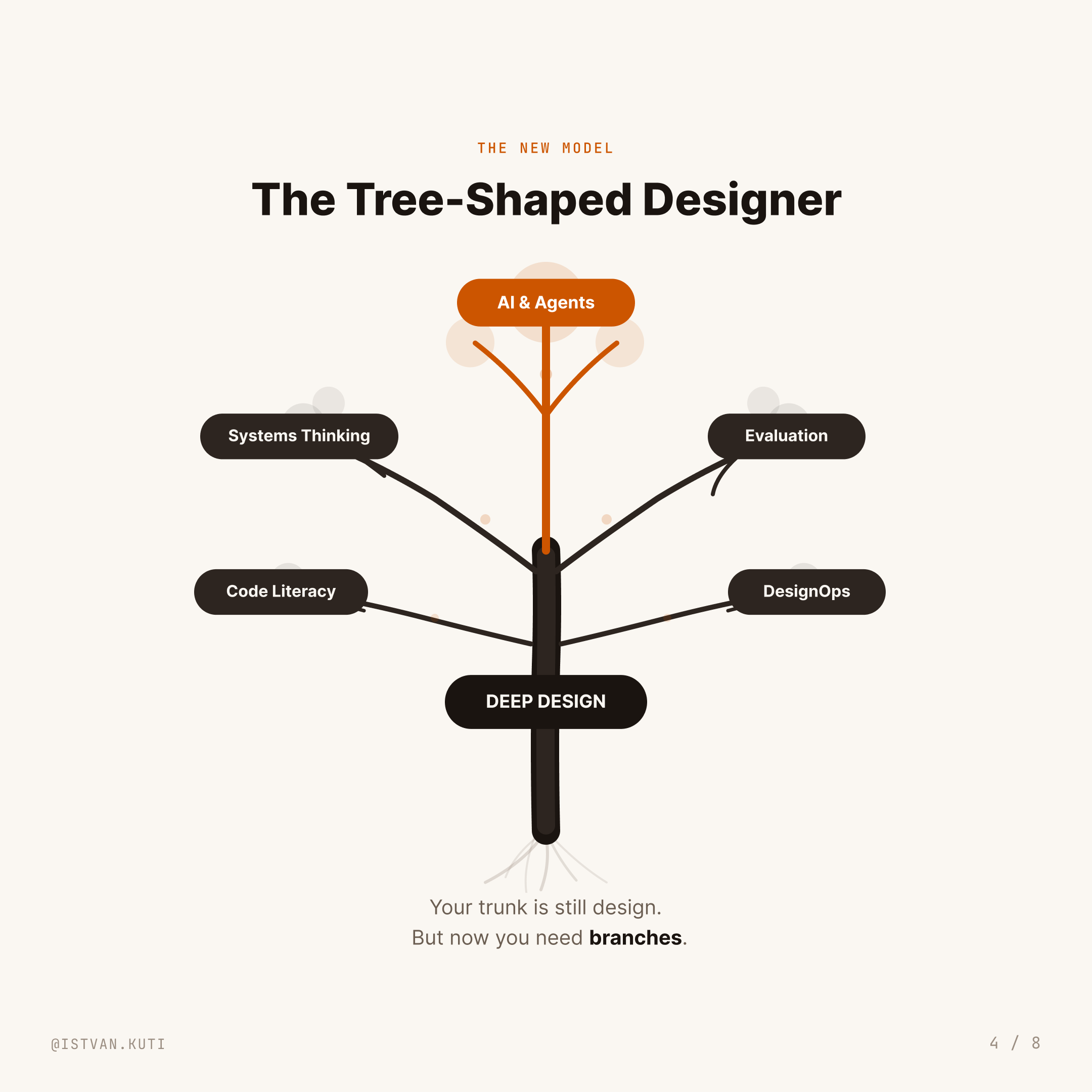
Your trunk is still design. Your core competency of understanding human needs and creating solutions hasn't changed. But now, you need branches.
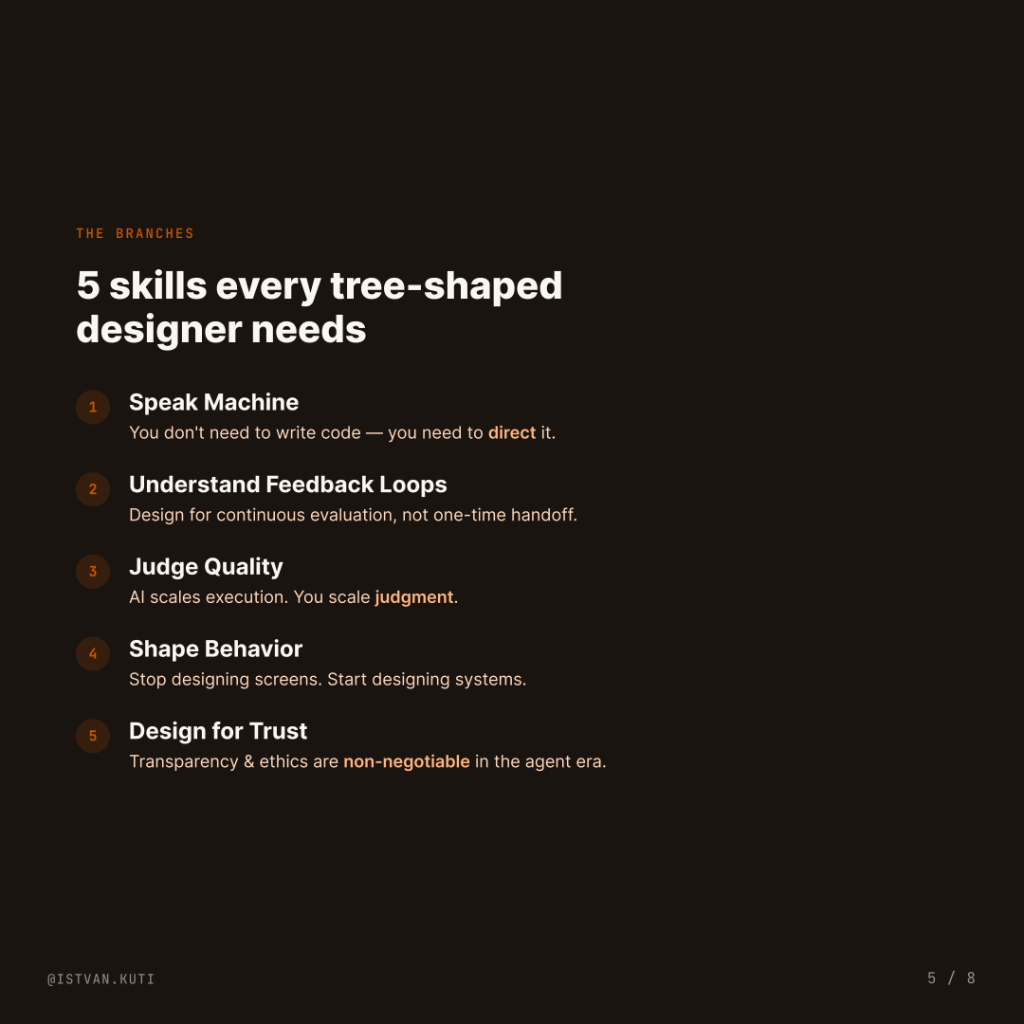
5 Skills Every Tree-Shaped Designer Needs
1. Speak Machine
Learn to prompt effectively, read code, and understand MCP. You don't need to write code — you need to direct it.
2. Understand Feedback Loops
Design for continuous evaluation, not a one-time handoff.
3. Judge Quality
Your taste is your moat. AI scales execution. You must scale judgment.
4. Shape Behavior
Stop designing screens. Start designing systems that shape behavior.
5. Design for Trust
Transparency, accessibility, and ethics are non-negotiable in the agent era.
The Biggest Shift of All: Design THE Systems
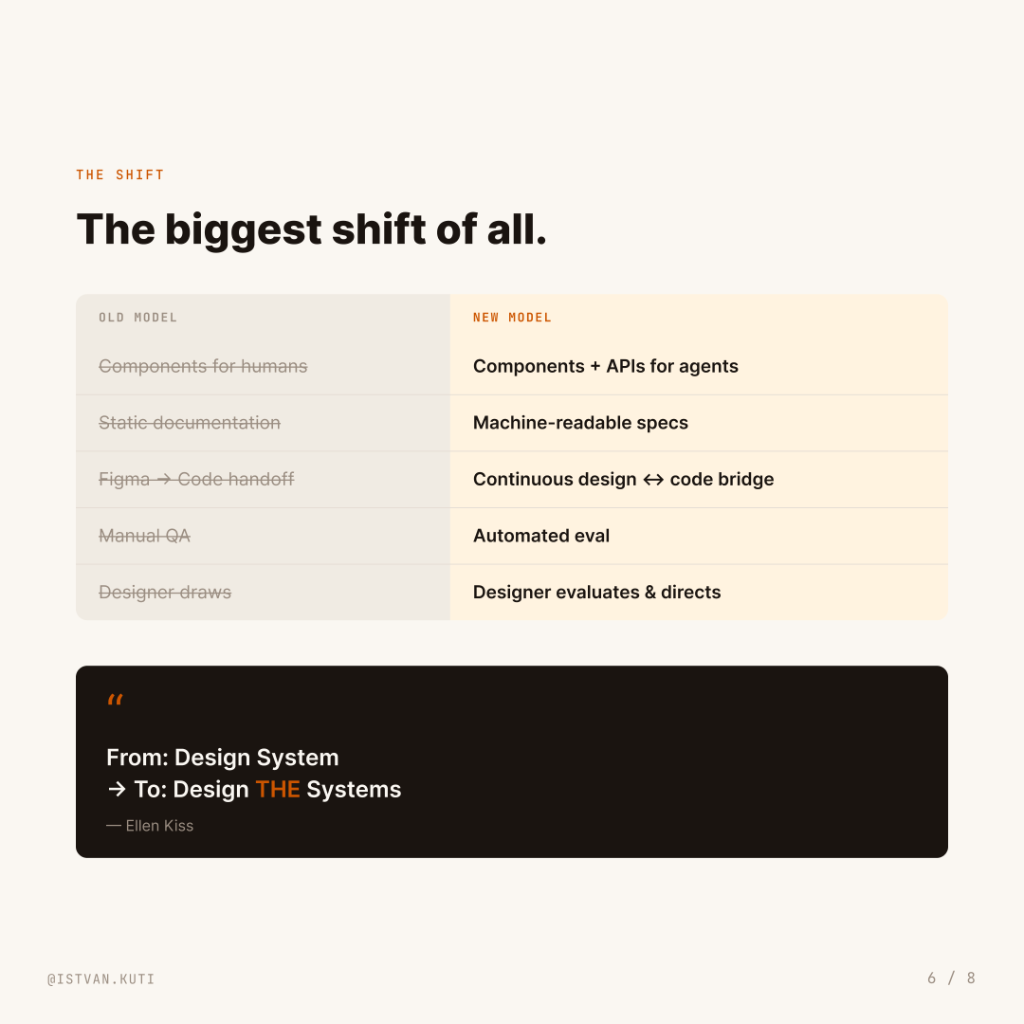
| Old model | New model | | :--- | :--- | | Components for humans | Components + APIs for agents | | Static documentation | Machine-readable specs | | Figma → Code handoff | Continuous design ↔ code bridge | | Manual QA | Automated eval (visual + semantic) | | Designer draws | Designer evaluates and directs |
Ellen Kiss said it best:
"From: Design System → To: Design THE Systems"
This isn't theory. It's already happening.
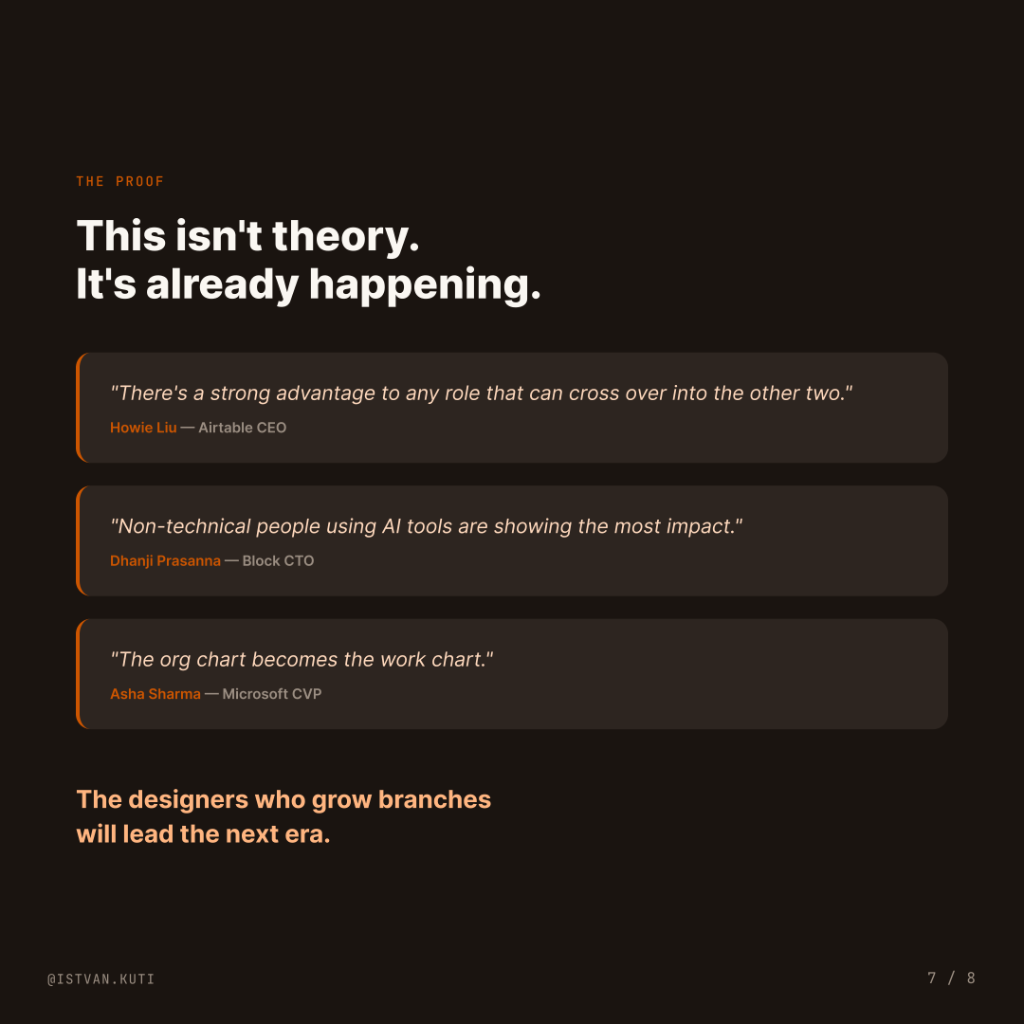
- "There's a strong advantage to any role that can cross over into the other two." — Howie Liu, Airtable CEO
- "Non-technical people using AI tools are showing the most impact." — Dhanji Prasanna, Block CTO
- "The org chart becomes the work chart." — Asha Sharma, Microsoft CVP
The designers who grow branches will lead the next era.
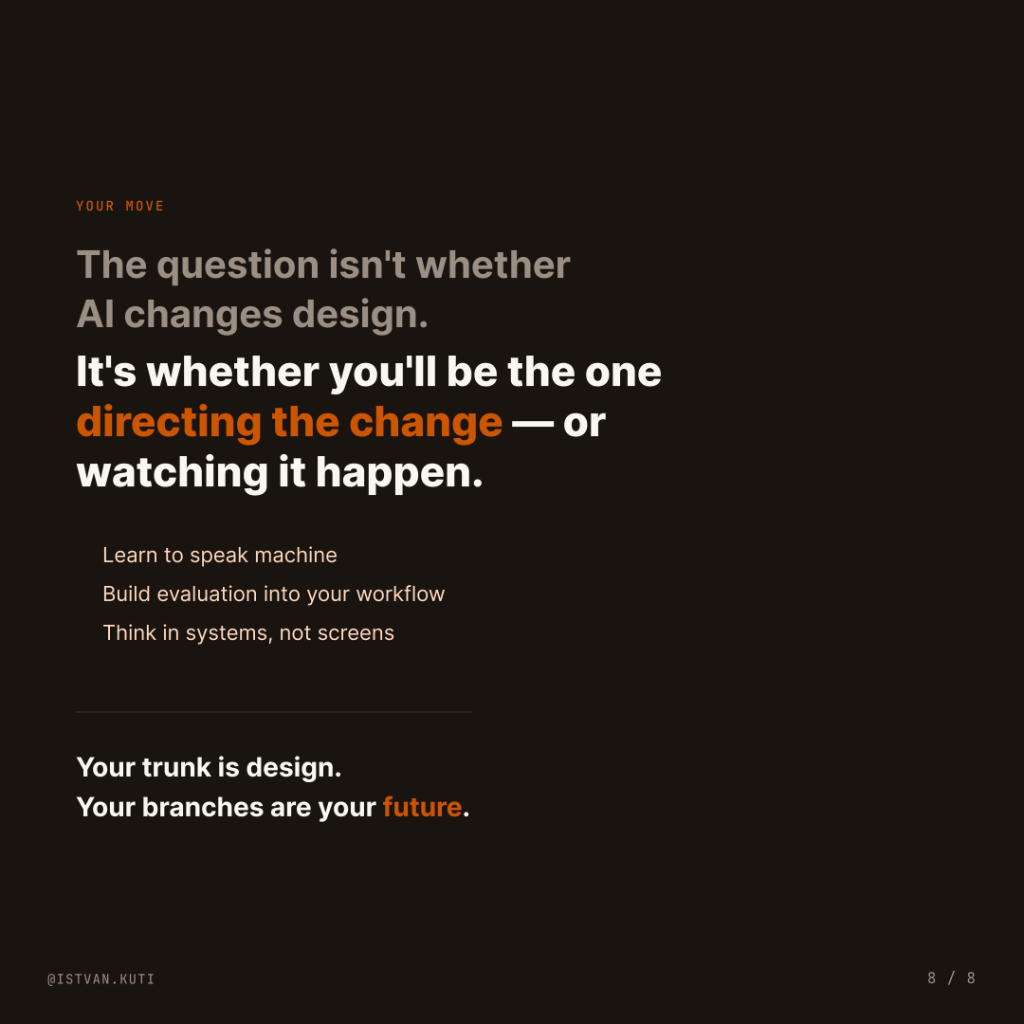
The question isn't whether AI changes design.
It's whether you'll be the one directing the change—or watching it happen.
Start growing your branches today.
- Learn to speak machine
- Build evaluation into your workflow
- Think in systems, not screens
Your trunk is design. Your branches are your future.
További írások az archívumból
The Hidden Emotions Shaping AI Behavior
Why AI models develop 'functional emotions' during training—and why understanding their internal 'desperation' is key to building safer products.
A Jev nem chatbot: így építs AI-döntéseket a termékedbe
A Jev nem olcsóbb chatbot, hanem strukturált döntési motor. Így használd kötegeléssel, konfidenciaküszöbökkel és biztos rendszerhatárokkal.
Ehhez a gondolathoz kapcsolódó projektek
Open Brain: Building a Personal Knowledge Backend with AI
Open Brain: Building a Personal Knowledge Backend with AI What if your notes could think? Not in a sci fi way — but in a practical, "I wrote something three months ago th…
Raiffeisen Bank: End-to-End Online Account Opening
Raiffeisen Bank: End to End Online Account Opening When Raiffeisen Bank decided to let customers open a bank account entirely online — no branch visit required — they kne…